
Unforgettable Books
-
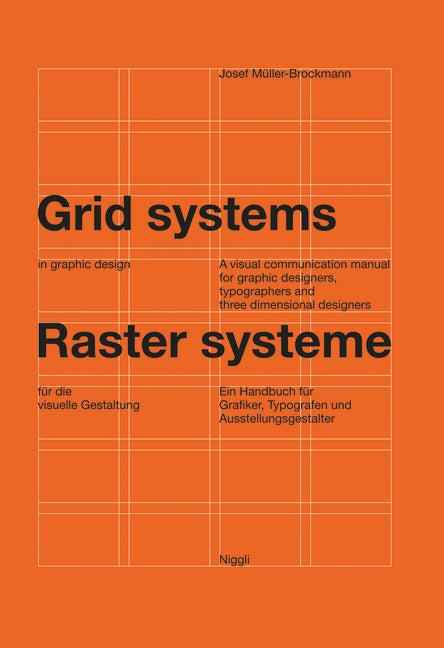
Grid Systems in Graphic Design: A Visual Communication Manual for Graphic Designers, Typographers and Three Dimensional Designers (Bilingual)
Grid Systems in Graphic Design A Visual Communication Manual for Graphic Designers By Josef Müller-Brockmann 📘 Product Overview Unlock the timeless principles of structure, clarity, and visual harmony with Grid Systems in Graphic Design by Josef Müller-Brockmann—one of the most influential design manuals ever published. This classic guide distills the fundamentals of grid-based design, offering a systematic approach to creating balanced, readable, and aesthetically powerful layouts. Whether you're a professional designer, design student, or creative enthusiast, this book is an indispensable reference for mastering modern visual communication. 🎯 What You’ll Learn How to construct and apply modular grid systems Techniques for improving readability and visual hierarchy How to design structured layouts for books, posters, and interfaces Principles of Swiss modernist (International Typographic Style) design How to create consistent, scalable design systems ✅ Key Benefits Create clean, organized, and professional layouts Improve clarity and communication in design work Build repeatable systems for branding and editorial design Apply structured thinking to both print and digital projects 🧩 Common Use Cases Learning grid systems in design education Improving layout consistency in branding projects Designing magazines, books, and posters Creating scalable design systems for digital products 🏆 Why Designers Trust This Book Authored by a pioneer of Swiss graphic design Focuses on structure and clarity, not passing trends Used as a reference in design education and professional practice Provides a systematic framework that applies across industries 🚀 Ideal For Graphic designers (beginner to advanced) UI/UX designers building layout systems Design students learning foundational principles Creative professionals working in typography or editorial design 📊 Product Details Format: Hardcover Language: English and German Category: Graphic Design, Typography, Visual Communication Ideal For: Designers, students, creatives, educators
$64.95 $59.95
-

Graphic Design: The New Basics (Second Edition, Revised and Expanded): The New Basics (Second Edition, Revised and Expanded)
"A longstanding excellent primer, in an equally excellent updated edition."--Print Ellen Lupton and Jennifer Cole Phillips's celebrated introduction to graphic design, available in a revised and updated edition. Graphic Design: The New Basics (Second Edition, Revised and Expanded) explains the key concepts of visual language that inform any work of design. A foundational graphic design book for students, Lupton and Phillips explore the formal elements of design through visual demonstrations and concise commentary. From logos to letterhead to complex website design, this is a graphic design book for everyone, no matter your design project or focus. Topics include: - Color - Texture - Rhythm and balance - Hierarchy - Layers - Grids - And much more! The new revised edition features new chapters on: - Visualizing data - Typography - Modes of representation - Gestalt principles Sixteen new pages of student and professional work covering such topics as working with grids and designing with color make this a course adoption favorite in any graphic design program and graphic design school. Graphic Design: The New Basics is an invaluable introduction to the field of graphic design for beginners from two accomplished designers and design educators.
$35.00
-

Interaction of Color (-50th Anniversary)
The 50th anniversary edition of a classic text, featuring an expanded selection of color studies "The landmark 1963 book by Josef Albers . . . isn't just for aspiring artists. Its mesmerizing illustrations are a revelation for anyone interested in color theory and human perception."--Pilar Viladas, New York Times "A visionary work."--Malcolm Jones, Newsweek Josef Albers's classic Interaction of Color is a masterwork in art education. Conceived as a handbook and teaching aid for artists, instructors, and students, this influential book presents Albers's singular explanation of complex color theory principles. Originally published by Yale University Press in 1963 as a limited silkscreen edition with 150 color plates, Interaction of Color first appeared in paperback in 1971, featuring ten color studies chosen by Albers, and has remained in print ever since. With over a quarter of a million copies sold in its various editions since 1963, Interaction of Color remains an essential resource on color, as pioneering today as when Albers created it. Fifty years after Interaction's initial publication, this anniversary edition presents a significantly expanded selection of close to sixty color studies alongside Albers's original text, demonstrating such principles as color relativity, intensity, and temperature; vibrating and vanishing boundaries; and the illusion of transparency and reversed grounds. A celebration of the longevity and unique authority of Albers's contribution, this landmark edition will find new audiences in studios and classrooms around the world.
$21.95
-

The Typography Idea Book: Inspiration from 50 Masters (Type, Fonts, Graphic Design)
"This book is a short read, perfectly pitched at those looking to take their first step into the world of typography" CreativeBloq "Geared towards helping you evolve different typographic styles, the book [...] is packed with practical techniques and iconic examples" - Creative Boom Playing with typographic puzzle pieces is one of the joys of graphic design and typographers have many entertaining, esoteric, and eccentric options at their disposal. The Typography Idea Book presents 50 of the most inspiring approaches used by masters of the field from across the world, visible in all areas of popular culture. Beautifully illustrated, this book presents images from leading designers who use fonts, lettering, illustrations and digital media in all fields of the visual arts, including web design, logo design and branding. Geared towards helping you evolve different typographic styles, The Typography Idea Book contains none of the technical jargon or tired old rules found in traditional tutorials but is packed with practical techniques and iconic examples. From type transformation to abstraction, via overlapping, hand-lettering, vectorizing, novelty typefaces, and puns, discover all the brilliant ideas you could be bringing to your own designs. From the introduction: "Not every designer is a good, much less a great, typographer. Actually, to be a great typographer you have to be a highly skilled graphic designer in the first place. Typography is, arguably, the most important component of graphic design. It requires a distinct ability to make readable messages while expressing, emoting and projecting concepts to audiences, large and small. Typography can be copied and, therefore, it can be taught. Like the classical painting student learning to perfect the rendering of human form by repeatedly drawing from the same plaster cast, the best way to learn typography is to do it over and over again. Theory is fine, but practice is necessary in order to develop a visceral feeling about the way letters sit on a page or screen. You must know if they are in harmony, or unsuited to marriage. Playing with typographic puzzle pieces is one of the joys of typography. While the end result must be understandable - though please note that doesn't necessarily mean legible, for illegibility is relative and what is illegible can often be deciphered - the process can be intuitive. What you see is more than what you get: playing with type is an opportunity to create typographic personalities both for yourself and for your clients. This book is geared towards helping you evolve different typographic characters or styles, or perhaps even your specific design signature. What this book is not is a tutorial in typographic basics - kerning, spacing, selecting, and so on. There are many excellent existing volumes that will give you that essential knowledge. Our intention here is to lay out many of the fun, esoteric and eccentric options a typographer has at his or her disposal. These 'commonly uncommon' approaches include type transformation and mutation, as well as puns and metaphors, and typographic pastiche and quotation. In other words if typographic basics are the 'main course' in your typographic feeding frenzy, the ideas herein are the dessert. It's time to indulge yourself in what is offered on the menu of typographic confections." - Steven Heller and Gail Anderson
$25.00


